

Why the Tie Strap Dress Is the Most Versatile Summer Silhouette You Can Own
There’s something about a dress that adjusts to your body instead of the other way around. I didn’t fully grasp this until I slipped into my first tie strap dress three summers ago — and honestly, I’ve never looked back. The tie strap dress sits at this perfect intersection of intentional design and effortless wearability. You don’t need a tailor, you don’t need safety pins, and you certainly don’t need to spend the entire evening hiking up straps that refuse to stay put. The straps tie exactly where you need them to, creating a fit that feels custom-made whether you picked it up from a boutique or a fast-fashion rack. According to Vogue Business, adjustable garment features have seen a 34% increase in consumer preference since 2023, driven largely by the rise of body-positive fashion movements and the growing demand for pieces that adapt rather than dictate. The tie strap dress embodies this shift perfectly — it’s not just a pretty silhouette; it’s a smart one.

What makes the tie strap dress stand out from the sea of summer dresses flooding the market right now? For starters, those delicate little ties at the shoulders do more than look cute in Instagram flat lays. They solve one of the oldest problems in women’s fashion: the dreaded strap-slip. Anyone who’s worn a standard spaghetti strap dress knows the awkward dance — tugging one side up, adjusting the other, only to have both slide right back down within ten minutes. Tie straps eliminate that entire ordeal. You simply tighten the bow to your preferred tension, and the dress stays where you put it. This functional detail has catapulted the style from niche resort wear to mainstream wardrobe essential. Harper’s Bazaar recently featured the tie strap silhouette as one of the top five dress trends defining the 2026 summer season, noting that designers from Jacquemus to Zimmermann have embraced the adjustable strap as both a functional and decorative element. The beauty of this trend lies in its accessibility — you don’t need a four-figure budget to participate. Brands at every price point have rolled out their own versions, from linen tie strap dresses perfect for farmers’ market mornings to silk iterations worthy of rooftop cocktail hours.
My Journey with Tie Strap Dresses — and Why I’ll Never Go Back
I remember the exact moment I converted. I was in a fitting room with a stack of summer party options, increasingly frustrated because everything either gaped at the chest or dug into my shoulders. Nothing sat right. The sales associate — clearly sensing my impending meltdown — handed me a powder blue linen tie strap dress and said, “Try this one. The straps adjust.” Three words that changed my entire approach to shopping. I tightened the ties to fit my frame, looked in the mirror, and felt like someone had finally designed a piece of clothing that acknowledged human bodies come in different proportions. That single experience rewired how I evaluate every garment I bring into my closet. Before the tie strap dress entered my life, I’d spent years settling for dresses that were “close enough” — close enough in the bust, close enough in the shoulder-to-waist ratio, close enough in overall length. But clothing shouldn’t be about settling, and the tie strap mechanism proves that good design can bridge the gap between mass production and individual fit.
Since that fitting-room epiphany, I’ve collected tie strap dresses across multiple fabrics, colors, and silhouettes. The collection spans casual cotton versions for daytime errands, elegant satin options for evening events, and even a midi-length linen number that’s become my unofficial uniform for every summer wedding I’ve attended in the past two years. Each one shares the same fundamental advantage: the ability to customize the shoulder fit in seconds, without tools, without alterations, without fuss. What strikes me most about this style is how it manages to be simultaneously practical and pretty. The ties themselves — whether they’re thin spaghetti-style ribbons or wider fabric bands that form statement bows — add a decorative element that set photos and event shots love. According to Who What Wear, the tie strap detail photographed especially well at the spring 2026 runway shows in New York and Paris, where editors captured the bows as a micro-trend within the larger dress category. A well-tied bow at the shoulder catches light, adds dimension, and signals to anyone looking that you’ve paid attention to the details. And in fashion, the details are where personal style actually lives.
The Surprising History Behind Adjustable Strap Design
You might assume tie straps are a modern invention — something dreamed up by a contemporary designer looking to solve a practical problem while adding a decorative touch. But the adjustable shoulder strap actually traces back much further than most people realize. Historical costume references from the Victoria and Albert Museum’s fashion archives show that tie-fastened shoulder details appeared in women’s undergarments as early as the late 18th century, when chemise dresses featured ribbon ties at the shoulders for adjustability. These early iterations served a purely functional purpose: allowing a single garment to fit multiple wearers in households where clothing was shared among sisters or passed down through generations. Fast forward to the 1930s and 1940s, and the tie strap made appearances in beachwear and sundresses, particularly in European resort fashion along the French Riviera. Designers like Coco Chanel and Elsa Schiaparelli experimented with adjustable elements as part of their broader mission to liberate women from restrictive clothing.
What’s fascinating is how the tie strap dress has cycled through fashion’s revolving door, falling in and out of mainstream favor while never fully disappearing. In the 1970s, the bohemian movement embraced tie-strap sundresses as part of the free-spirited aesthetic championed by icons like Stevie Nicks and Joni Mitchell. In the 1990s, the silhouette resurfaced in the slip dress trend, with adjustable spaghetti straps becoming a defining feature of the minimalist, grunge-adjacent look that dominated the decade. Vogue’s archival editor Laird Borrelli-Persson has documented how the 1994 Calvin Klein slip dress — with its whisper-thin adjustable straps — became one of the most referenced garments in fashion history, worn by Kate Moss and spawning countless reinterpretations across every price tier. What sets today’s tie strap dress apart from previous iterations is the intentionality behind the design. Modern versions don’t just offer adjustability as a secondary feature; they foreground the ties as a deliberate style statement. The bow itself — whether oversized and dramatic or small and understated — has become a focal point rather than a hidden adjustment mechanism.
How I Style My Tie Strap Dresses Across Five Different Scenarios
One of the reasons I keep reaching for tie strap dresses is their chameleon-like ability to work across completely different contexts. The same silhouette that looks perfectly at home at a Sunday brunch can transition seamlessly to an evening gallery opening with just a few thoughtful styling adjustments. For casual daytime wear, I pair a cotton or linen tie strap dress with flat leather sandals, a woven tote bag, and minimal jewelry — think thin gold hoops and a simple chain necklace. The look reads as effortlessly put-together without trying too hard, which is exactly the energy I want on a warm afternoon. When I’m headed to the office or a more structured daytime event, I layer a lightweight blazer or cropped cardigan over the dress, swap the sandals for low block heels, and add a structured handbag. The tie straps actually work better under layers than traditional straps because you can adjust them to sit perfectly flat under a jacket without creating bulk or visible lines.
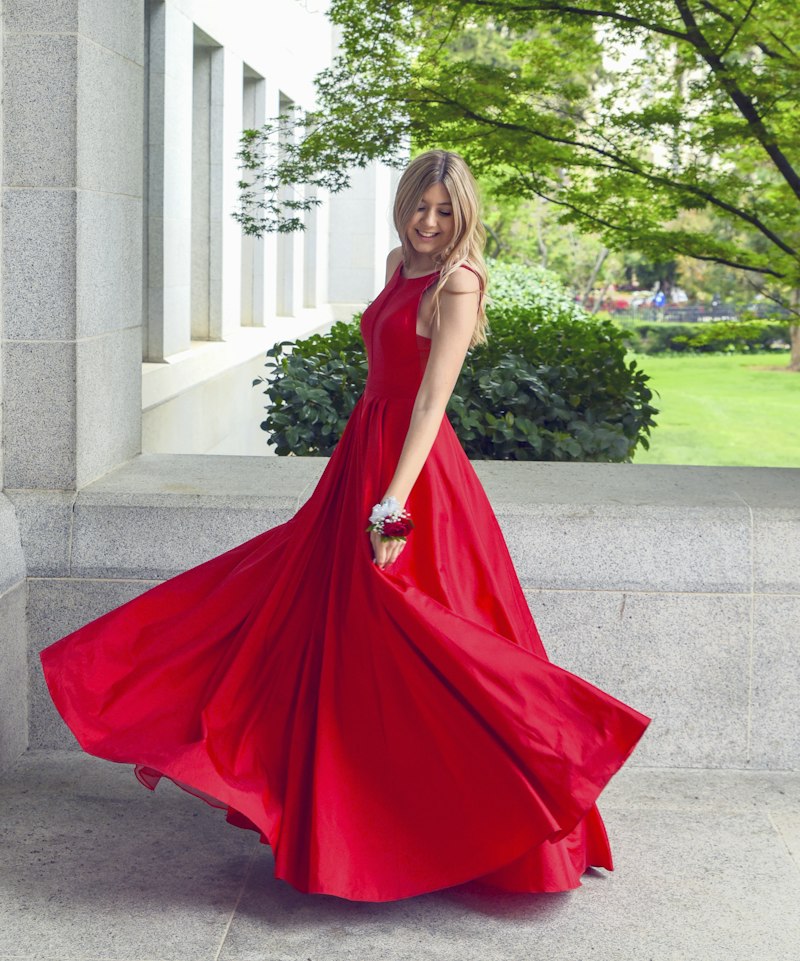
For evening occasions, I’m a firm believer that a silk or satin tie strap dress can hold its own against any cocktail dress in the room. I tighten the straps slightly to create a more lifted, polished line across the shoulders, then add statement earrings, a metallic clutch, and strappy heeled sandals. The exposed shoulder area — accentuated by the delicate tie detail — draws the eye upward and creates a naturally elegant neckline. If the venue has aggressive air conditioning or the evening turns cool, a cropped leather jacket or fitted cashmere wrap keeps the look intentional rather than frantic. For beach vacations and resort settings, I live in my linen tie strap dresses worn open over swimsuits during the day, then dressed up with espadrilles and wooden jewelry for sunset dinners. And when I need something for a wedding or formal garden party, a floor-length tie strap dress in a bold print or rich jewel tone consistently earns compliments — the ties add visual interest at the shoulders that elevates the entire silhouette. According to a styling feature in Elle magazine, pairing a tie strap dress with contrasting accessories — think a delicate floral dress with chunky platform sandals, or a sleek satin version with oversized resin earrings — creates the kind of tension that makes an outfit memorable rather than just pretty.
The Fabric Factor — What Your Tie Strap Dress Material Says About You
Choosing the right fabric for a tie strap dress isn’t just about aesthetics — it directly impacts how the style performs on your body throughout the day. Linen is my go-to for anything involving heat and humidity. The natural fiber breathes beautifully, and the slight texture adds visual depth without requiring pattern or embellishment. The one caveat with linen tie strap dresses: you’ll want to tie your straps slightly tighter than usual, because linen relaxes as you wear it and those ties can loosen over several hours. Cotton poplin and lightweight cotton voile offer similar breathability with less wrinkling, making them excellent choices for travel. I’ve packed cotton tie strap dresses for week-long trips and pulled them out of my suitcase ready to wear — a feat no linen garment has ever accomplished. On the more elevated end of the spectrum, silk and satin tie strap dresses bring a liquid-like drape that photographs beautifully and feels luxurious against the skin. The ties themselves take on a different character in silk, forming elegant, almost sculptural bows that hold their shape.
Rayon and viscose blends occupy the middle ground — they offer the drape of silk at a fraction of the price, though they require more careful laundering. I’ve learned through trial and error that rayon tie strap dresses should be hand-washed or placed in a mesh bag on the gentlest cycle, because the friction from a regular wash can cause the ties to fray or the fabric to pill around the strap attachment points. Jersey knit tie strap dresses deserve their own category entirely. The stretch fabric combined with adjustable straps creates a fit so customized it almost feels like the dress was made for your specific measurements. Jersey versions tend to skew more casual, but a well-cut black jersey tie strap midi dress with the right accessories can read as effortlessly chic in almost any setting. Textile experts at the Fashion Institute of Technology have pointed out that the attachment point between tie straps and the dress bodice is the highest-stress area of the garment, and quality construction here — reinforced stitching, interior facing, or French seams — separates a dress that lasts multiple seasons from one that frays after the third wear. When I’m evaluating a new tie strap dress, I always flip it inside out and inspect exactly how those straps connect to the bodice. If the stitching looks sparse or the fabric around the attachment point seems thin, I put it back on the rack.
Body Types, Fit Concerns, and Why Tie Straps Are a Game-Changer
Let me be direct about something the fashion industry often dances around: off-the-rack dresses are designed for a standardized body that very few actual women possess. The distance from shoulder to bust, the width of the shoulder itself, the slope of the trapezius — these measurements vary enormously from person to person, yet most dresses treat them as constants. The tie strap dress is one of the rare silhouettes that acknowledges this reality and offers a genuine solution. For women with narrower shoulders, the ability to tighten straps means no more gaping armholes or constantly pulling up a slipping neckline. For those with broader shoulders or a more athletic build, loosening the ties creates breathing room that fixed straps simply can’t provide. For anyone with a longer or shorter torso than the industry standard, adjusting the strap length effectively raises or lowers the entire bodice, shifting the waist placement to where it actually belongs on your body.
Bust size plays a significant role in how tie strap dresses fit, and the adjustability factor is particularly beneficial here. A larger bust often means standard straps cut in at uncomfortable angles or fail to provide adequate support. With tie straps, you can customize the tension to distribute weight more evenly across the shoulder, and the bow detail can be tied in a way that partially conceals bra straps — a practical consideration that matters enormously in real-life wear. For women with a smaller bust, tie straps that are snugged down create a secure fit that prevents the gaping often experienced with fixed-strap designs. Beyond the fit mechanics, tie straps also create optical effects worth considering. The bows draw the eye outward to the shoulders, which can balance wider hips or create the illusion of broader shoulders on a pear-shaped frame. If you have an inverted triangle body shape and want to minimize shoulder width, skipping the dramatic bow in favor of a tight, minimal knot keeps the visual emphasis more evenly distributed. Celebrity stylist Allison Bornstein, who has dressed clients ranging from Katie Holmes to Mandy Moore, frequently recommends tie strap silhouettes for red carpet appearances precisely because the adjustability ensures the dress photographs consistently from every angle — no last-minute double-stick tape emergencies, no wardrobe-malfunction anxiety.
Colors, Prints, and the Tie Strap Dress Aesthetic Spectrum
Color choice transforms a tie strap dress more dramatically than almost any other design element. A crisp white tie strap dress in cotton poplin channels Mediterranean vacation energy — think Amalfi Coast lunches and Santorini sunset walks. The white fabric makes the tie details pop visually, creating high-contrast detail points that draw the eye. Black tie strap dresses operate in an entirely different register, reading as sophisticated, urban, and effortlessly cool. My black silk tie strap midi dress has attended more evening events than any other piece in my closet precisely because it never looks like I tried too hard — the simplicity of the silhouette combined with the delicate shoulder ties strikes a balance that more complicated dresses rarely achieve. Solid jewel tones like emerald green, sapphire blue, and deep burgundy bring a richness that makes the dress feel more formal even in casual fabrics, while pastels — particularly lavender, butter yellow, and powder blue — lean into the romantic, garden-party associations that the tie detail naturally evokes.
Prints take the tie strap dress in yet another direction. Bold florals, a perennial summer favorite, work beautifully with the soft, feminine lines that tie straps create. Smaller-scale prints like micro-ditsy florals or delicate polka dots read more subtle and can transition from day to evening more smoothly than their louder counterparts. Stripes on a tie strap dress create an interesting visual tension between the linear pattern and the curved, organic shape of the bows at the shoulders — a contrast that registers as intentional and fashion-forward. When evaluating prints, I always check where the pattern falls relative to the strap attachment points. A well-cut tie strap dress will have the print aligned so the ties don’t disrupt a focal motif, while a less carefully constructed version might have a large floral bloom partially cut off at the shoulder seam. This is the kind of detail that separates thoughtfully designed garments from mass-produced knockoffs, and it’s worth paying attention to when you’re making a purchase decision. As Marie Claire’s fashion team observed in their 2026 summer trend report, the tie strap detail appears across every major print category this season, from abstract watercolor washes to graphic geometric patterns, which means you can find the style in whatever visual language speaks to your personal aesthetic.
Making Your Tie Strap Dress Work Across Seasons
Calling a tie strap dress a summer-only piece is like calling a good pair of jeans a weekend-only item — technically true for some people, but missing the whole picture of what the garment can actually do. Summer is absolutely where the tie strap dress shines brightest, worn on its own with sandals and sunglasses, the ties adjusted to sit perfectly on sun-warmed shoulders. But I’ve worn my tie strap dresses comfortably well into October and pulled them back out as early as March, because layering transforms the silhouette entirely. A thin turtleneck worn underneath a tie strap dress creates a completely different garment — the dress effectively becomes a jumper with decorative shoulder details. I’ve worn this combination with opaque tights and ankle boots to gallery openings in early spring and received more questions about where I found the “top” than about the dress itself. The key to successful under-layering is choosing a fitted base piece that doesn’t add bulk around the arms and shoulders, where the tie detail needs to remain visible and unimpeded.
Over-layering offers even more versatility. A cropped chunky knit sweater pulled over a tie strap dress instantly converts it into a skirt-and-top combination, with the ties peeking out at the shoulders if the sweater has a wide neckline. Denim jackets, leather moto jackets, and tailored blazers each create a distinct seasonal personality for the same base garment. In autumn, I love my rust-colored tie strap midi dress worn with a cream cable-knit cardigan and cognac knee-high boots — the dress provides a lightweight, flowing counterpoint to the heavier textures of the outerwear and footwear. In winter, a tie strap dress in velvet or heavyweight jersey with a fitted turtleneck underneath and a long wool coat on top can absolutely work for holiday parties, especially if the dress hits at midi or maxi length. Fashion blogger and stylist Alyssa Coscarelli has been documenting her year-round tie strap dress styling on Instagram, demonstrating how the same black satin version works for beach vacations in July, office meetings in September, and festive dinners in December — all through strategic layering and accessory choices. The investment-per-wear math on a well-chosen tie strap dress makes a compelling case for spending a bit more on quality construction, because a dress you can genuinely wear across three or even four seasons delivers exponentially more value than a single-season novelty piece.
Care, Maintenance, and Keeping Those Straps Looking Fresh
The ties on a tie strap dress are simultaneously its best feature and its most vulnerable element. Those delicate ribbons or fabric bands undergo more stress than almost any other part of the garment — they’re pulled, tied, untied, retied, and subjected to the friction of shoulder bags and seat backs and enthusiastic hugs. Taking care of them properly extends the life of your dress by seasons, possibly years. I wash all my tie strap dresses — regardless of fabric — inside a mesh laundry bag on the delicate cycle with cold water, even when the care label technically permits a regular wash. The mesh bag prevents the ties from wrapping around other items in the load, which is how those frustrating stretched-out or twisted straps happen. Before washing, I always untie the bows fully rather than leaving them knotted, because water and detergent can set wrinkles into the fabric at the knot point that become nearly impossible to iron out later. For silk and satin versions, I hand-wash in cool water with a gentle detergent designed for delicates, then roll the dress in a clean towel to remove excess moisture before laying it flat to dry.
Storage makes a difference too. Hanging a tie strap dress by the ties themselves is a shortcut to stretched, misshapen straps that never quite recover their original form. I use padded hangers and make sure the dress hangs from the bodice or by the interior hanging loops, with the ties loosely draped rather than bearing any weight. For long-term storage between seasons, folding the dress and placing acid-free tissue paper between the folds prevents creasing and keeps the ties from developing permanent wrinkles at the fold points. If the ties do develop creases or lose their crispness, a handheld garment steamer usually does the trick — I keep the steamer about six inches from the fabric and let the steam relax the fibers rather than pressing or pulling at the ties directly. For stubborn wrinkles on cotton or linen straps, a pressing cloth and a low-heat iron can restore crispness, but I always test on an inconspicuous area first. The Laundress, a New York-based garment-care brand, recommends treating fabric ties with a light starch spray after washing to help them hold their shape and resist fraying, particularly for natural fiber dresses that see frequent wear. One final tip from hard-won experience: always pack a backup tie strap dress when traveling for events. The ties themselves are small and unobtrusive in a suitcase, and having the ability to adjust your fit on the fly means you’ll never be the person frantically searching for a safety pin ten minutes before a ceremony starts.
Finding the Right Tie Strap Dress for Your Personal Wardrobe
After three years of collecting, wearing, and occasionally retiring tie strap dresses, I’ve developed a checklist that I run through before adding a new one to my wardrobe. First, I examine the strap attachment points from the inside of the dress — if the stitching is single-line and the fabric shows any pulling or distortion, I move on regardless of how beautiful the dress looks on the hanger. The attachment is the failure point, and no amount of pretty fabric or perfect color can compensate for straps that will detach after five wears. Second, I check the length and width of the ties themselves. Ties that are too short limit adjustability; ties that are too long become cumbersome and look sloppy if the excess dangles awkwardly after tying. The sweet spot is a length that allows a secure double-knot with a proportionate bow that doesn’t overwhelm the shoulder or look stingy and pinched. Third, I evaluate the overall proportion of the dress relative to the strap width — thin spaghetti ties on a heavy fabric dress create a structural mismatch, while thick fabric-band ties on an ultra-delicate silk chiffon can look clunky.
Fourth, and perhaps most importantly, I ask myself whether the tie strap is an integral design element or an afterthought. The best tie strap dresses treat the ties as a central feature — the bow is sized intentionally, the fabric matches or thoughtfully contrasts, and the overall silhouette accounts for the visual weight the ties add at the shoulders. Lesser versions use generic ribbon or cord that looks like it was pulled from a craft store supply bin and hastily attached. The difference is immediately apparent in person, and it’s the kind of detail that separates a piece you’ll wear for years from one that ends up at the back of your closet after a single season. When you find a tie strap dress that checks all these boxes — solid construction, intentional design, quality fabric, and that magic adjustability factor — you’ve found something worth investing in. It’s not just another dress. It’s a solution to a problem that most women’s clothing simply ignores, and that’s the kind of garment that earns its place in your regular rotation through sheer practical genius.