

The A-Line Dress: Why This Single Silhouette Has Outlasted Every Trend for 70 Years
You’ve probably owned at least three of them without realizing they share the same architectural DNA. The wedding guest dress hanging in your closet, the navy blue number you wore to that job interview, the floral piece you reach for every Sunday brunch — all of them are likely variations of an A-line dress, the silhouette that narrows at the shoulders and gradually widens toward the hem, forming the letter A in a way that feels more like geometry than fashion. Unlike the bodycon that squeezes, the shift that hangs without comment, or the empire that cuts high and hopes for the best, the dress with an A-line cut doesn’t demand a specific body type — it creates one, or at least creates the illusion of one. Born from a post-war hunger for something softer than military-sharp tailoring, the A-line dress has spent seven decades quietly dominating closets while trendier silhouettes came, burned bright, and vanished into the clearance racks of history. This isn’t a piece that needs reintroduction every season like some prodigal hemline; it’s the silhouette fashion keeps circling back to when it runs out of ideas — which, if we’re being honest, happens more often than designers would like to admit. What makes the A-line genuinely remarkable isn’t its longevity alone but the fact that it manages to look completely different depending on who’s wearing it, a chameleon quality that a bodycon dress or a pencil skirt simply cannot claim.
Where the A-Line Came From — It’s Not What Most People Think
Ask ten people who invented the A-line dress and nine will say Christian Dior. They’d be half right. The silhouette itself predates the French couturier by centuries — you can trace its basic geometry back to the flared tunics of ancient Greece, the fitted-bodice-full-skirt shapes of 18th-century European court dress, and the bell-shaped crinolines of the Victorian era. What Dior did in 1955 wasn’t invention; it was distillation. He took the full-skirted opulence of his own 1947 New Look — which had used up to twenty yards of fabric per skirt in deliberate defiance of wartime rationing — and pared it down into something sharper, cleaner, and notably less fabric-hungry. The resulting collection, which he called the “A Line,” debuted in Paris in the spring of 1955 and immediately did what Dior’s collections always did: it made everything else look dated and slightly try-hard. As Vogue’s editors wrote at the time, the A-Line collection represented “the most definite silhouette since the New Look itself” — a clean, triangular shape that flared gently from the shoulders without the dramatic waist suppression that had defined the previous decade. The irony is rich and worth pausing over: a silhouette named for the most basic letter of the alphabet became one of fashion’s most fluent statements, communicating effortlessness and modernity in a visual language every body type could understand. Within two years of that Paris show, the A-line had been copied by every manufacturer from Paris to Pennsylvania, and a new category of dress was permanently inscribed into the fashion lexicon.
The Geometry of Flattery — Why an A-Line Cut Works on Literally Everyone
There’s actual math behind why the A-line dress flatters more body types than any other single silhouette in the women’s clothing universe. The widening angle from shoulder to hem creates a visual triangle that does two things simultaneously: it draws the eye upward toward the face, neck, and shoulders while creating the optical illusion of an hourglass proportion regardless of the wearer’s actual measurements. A woman with narrow hips gets the suggestion of curve where none naturally exists; a woman with wider hips finds the fabric skims rather than clings, creating a clean unbroken line from the body’s widest point downward that reads as intentional rather than concealing. This isn’t fashion mysticism or the kind of vague styling advice that falls apart the moment you actually try it — it’s basic geometry that interior designers, architects, and visual artists have exploited for centuries. The A-line operates on the same principle as a well-proportioned room where vertical elements draw the eye up and flared bases ground the composition in a way that feels balanced rather than top-heavy. According to a 2024 analysis by fashion data platform Edited, A-line and fit-and-flare dresses consistently account for 23-28% of women’s dress sales across major retailers in the US and UK, outperforming bodycon styles by a factor of nearly two to one — a statistic that suggests the silhouette’s appeal isn’t just aesthetic but deeply commercial, rooted in how real women actually feel when they put one on and look in the mirror. What the sales data confirms is what any honest woman already knows: most days, you want to look good without feeling like your clothing is making demands on your body.
Christian Dior’s 1955 Collection — The Show That Changed the Rulebook
Dior’s spring 1955 collection didn’t just introduce a shape; it fundamentally altered the relationship between clothing and the female body in ways that rippled outward for decades. Before the A-Line, the reigning postwar silhouette was Dior’s own New Look — a construction of padded hips, wasp waists, and voluminous skirts that required foundation garments bordering on architectural engineering. Women were literally strapped into their clothes, their bodies reshaped to fit the garment rather than the other way around. The A-Line, by contrast, floated away from the body. Waistlines were de-emphasized rather than cinched; shoulders remained soft rather than structured; hemlines hovered just below the knee rather than sweeping the floor in a fabric-intensive drama. The Victoria and Albert Museum’s fashion collection notes describe the A-Line as “the first truly modern silhouette” precisely because it liberated women’s bodies from the rigid scaffolding — corsets, girdles, crinolines — that had defined Western dress for the better part of a century. What’s fascinating from a pure design perspective is how the A-line dress achieved elegance without the apparatus of physical constraint — no corsetry required, no petticoats, no structural boning, no foundation garments beyond whatever the wearer chose. In a decade that would end with the youthquake, the miniskirt, and the total dismantling of sartorial formality, Dior’s A-Line was the quiet, impeccably tailored bridge between the ornate rigidity of the 1940s and the radical bodily liberation of the 1960s. The collection’s impact was immediate and measurable. Within eighteen months, every major fashion house from Balenciaga to Givenchy was producing A-line variations, and the silhouette had trickled down through licensing agreements and pattern companies to department stores in cities across America and Europe.
Styling an A-Line Dress for Every Setting You Can Think Of
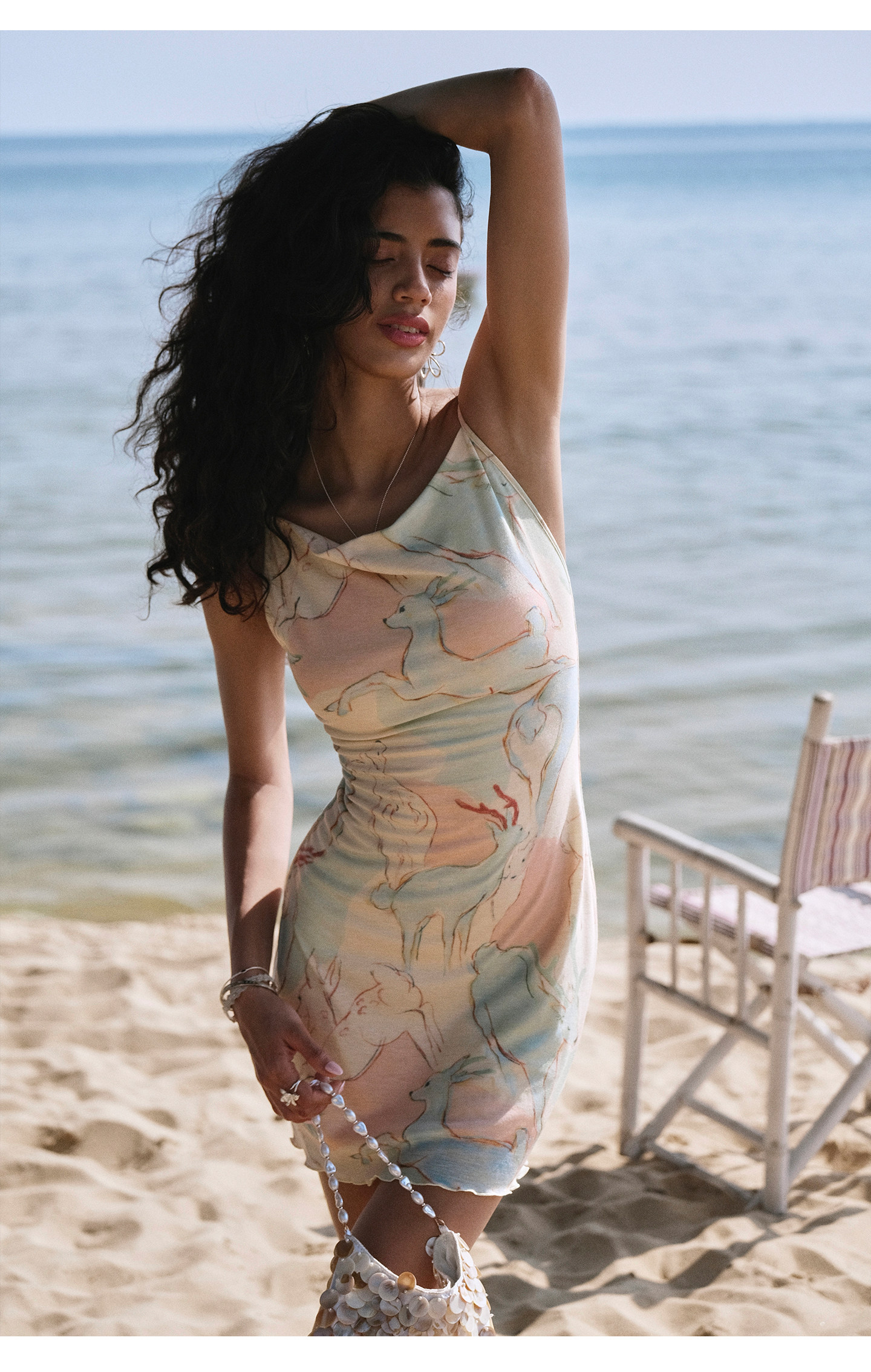
The A-line dress earns its permanent place in your closet not through novelty or trend-chasing but through the sheer range of contexts it handles without breaking character or requiring a complete outfit recalibration. For the office, a knee-length A-line in wool crepe or heavyweight cotton twill with a fitted bodice and three-quarter sleeves reads as polished without trying too hard — pair it with a low block heel in a neutral tone and a structured leather tote and you’ve solved the what-to-wear problem for roughly 200 workdays a year, which is frankly more value than anything else hanging in your closet. For evening, the same geometry in silk charmeuse or satin-backed crepe, perhaps with a deeper neckline, perhaps with a hem that hits mid-calf rather than knee, transforms into something entirely different — add a statement necklace that catches the light, switch to a heel with some genuine architecture, and you’re ready for a dinner that involves multiple courses and a wine list that requires some navigation. For weekends, a cotton or linen A-line dress in a midi length with flat leather sandals and a crossbody bag achieves the kind of thrown-together elegance that actually takes about ninety seconds to execute. The silhouette’s consistent optical shape means your accessories do the heavy lifting of defining the occasion — the dress itself stays neutral, adaptable, almost impossibly versatile in a way that feels slightly unfair to every other garment category. This is precisely why women who travel extensively, who pack in carry-ons, who need one piece to handle three different settings, tend to gravitate toward A-line dresses: one well-chosen piece, five entirely different looks depending on how you handle the shoes, the jewelry, and the outerwear.
Fabric, Length, and the Two Decisions That Change Everything
If the A-line dress has a genuine vulnerability — a way it can go wrong despite its famously forgiving geometry — it’s this: fabric choice and hem length determine whether the garment reads as sophisticated or frumpy, contemporary or vaguely costume-like. Stiff fabrics — heavy brocades, rigid taffetas, structured linens that could stand up on their own — will hold the A-shape with almost architectural precision but can add visual bulk if the flare begins too high on the torso, creating a triangle where you wanted an hourglass. Soft fabrics — silk crepe de chine, rayon challis, lightweight jersey with some weight to it — will drape rather than stand, creating a more fluid, more modern iteration of the silhouette that moves with the body rather than around it. The sweet spot for most body types and most contexts is a midweight fabric with enough internal structure to hold the intended shape but enough drape to avoid looking like a lampshade or a costume piece from a historical drama. Hem length is equally consequential and arguably even more personal: a mini-length A-line dress reads young, playful, 1960s London on a Saturday night; a knee-length version is the dependable workhorse of the category, equally appropriate for a client meeting, a baby shower, or a first date where you want to look like you care but not like you tried too hard; a midi-length A-line skews more formal and elongates the entire silhouette in a way that photographs beautifully; a full-length A-line operates firmly in gown territory, suitable for black-tie weddings, galas, and events where the dress code has its own paragraph on the invitation. As fashion director Sarah Harris noted in a British Vogue feature on timeless investment pieces, “the A-line is the only dress shape that genuinely works at every hem length. You cannot say that about a bodycon. You absolutely cannot say that about a pencil dress.” That level of versatility — across fabric choices, hem lengths, and formality levels — is what keeps the A-line dress perpetually relevant while trend-driven silhouettes cycle through their predictable fifteen minutes of fame.
A-Line Dresses in 2026 — What’s Changed and What Hasn’t
Walk through any Zara, Mango, or COS right now and you’ll find A-line dresses everywhere — but they don’t look like Dior’s 1955 originals, and they absolutely shouldn’t. The 2026 iteration of the A-line dress has absorbed influences from multiple decades of design evolution: the minimalism of the 1990s, with its clean seams, neutral palettes, and almost puritanical rejection of embellishment; the volume play of the 2010s, with its oversized proportions and dramatic flares that tested how far the A-shape could be pushed before it became something else entirely; and the sustainability-driven textile innovations of the 2020s — Tencel, recycled polyesters with actual drape, organic cottons cut in A-line shapes that minimize fabric waste compared to more complex pattern geometries. What’s notably absent from the current A-line landscape is stiffness. Today’s versions tend toward softer shoulders, less structured bodices, and fabrics that move with the body rather than dictating its position — a direct response to the post-pandemic reality that women no longer tolerate clothing that demands physical accommodation or requires a breaking-in period. The A-line mini dress in particular has seen a sharp resurgence among Gen Z shoppers who layer it over slim turtlenecks during winter months or wear it with chunky platform sandals in summer, treating the silhouette as a blank canvas for self-expression rather than a finished statement that leaves no room for interpretation. On the sustainability front, the A-line’s relatively simple pattern geometry — essentially two triangular panels joined at the sides with minimal curve-cutting — makes it one of the most fabric-efficient dress shapes to manufacture at scale, which matters enormously when fashion’s environmental accounting is under unprecedented scrutiny from both regulators and consumers.
Finding Your Perfect A-Line — What to Look for and What to Skip
Not every garment labeled “A-line” actually delivers the silhouette’s benefits, and the gap between marketing language and garment geometry can be substantial enough to ruin an otherwise promising shopping expedition. A true A-line dress flares from the shoulders or, more commonly, from the natural waist — if the flare begins at the hips instead, you’re looking at a fit-and-flare, which is a related but distinctly different category with its own set of proportions and its own relationship to different body types. When evaluating an A-line dress — whether you’re scrolling through product pages or standing in a fitting room with the tags still attached — look for a smooth, uninterrupted visual line from the narrowest point through the hem; any interruption, gathering, or tiered construction breaks the silhouette’s elongating optical effect and usually signals that the designer didn’t fully trust the simplicity of the shape. Seam placement matters more than most shoppers realize: princess seams that run vertically from shoulder or armhole through the hem create the cleanest, most flattering A-line geometry, while horizontal seam lines at the waist or hip can cut the body visually in ways that actively work against the silhouette’s lengthening purpose. The French A-line dress variation — characterized by a slightly more fitted bodice and a gentler, more gradual flare — offers a particularly versatile and sophisticated take on the silhouette that transitions easily from daytime contexts to evening settings with nothing more than a shoe change and a different pair of earrings. This is exactly the kind of piece worth buying in multiple colors once you’ve confirmed the cut works for your specific proportions.
Here’s what seventy years of A-line dominance actually proves, if you strip away the fashion jargon and the seasonal trend reports: fashion’s most enduring silhouettes are never the ones that demand the most from the person wearing them. The bodycon dress requires a specific, often fraught relationship with your own reflection. The slip dress demands confidence, the right underwear strategy, and a certain nonchalance that’s harder to fake than it looks. The bandage dress asks for Spanx and a posture correction and a level of physical self-awareness that borders on exhausting. The A-line dress — in any fabric, at any length, for any occasion on your calendar — asks for almost nothing. It doesn’t need you to be taller, narrower, curvier, or firmer than you actually are. It doesn’t require a specific body type, a specific age, or a specific level of fashion literacy. It just needs you to show up, put it on, zip it up, and walk out the door looking like you made a considered effort when you actually made a single decision that took less time than brewing your morning coffee. That’s not just good design or clever marketing. That’s the kind of quiet, almost invisible genius that explains why, seven full decades after Christian Dior sent those first triangular shapes down a Paris runway in 1955, you’re still reaching for an A-line dress on the mornings when you have exactly four minutes to get dressed and need to look like you had forty.