

So I Spent an Entire Month Wearing Nothing But Pink Dresses — Here’s What Actually Changed
Nobody plans to wear pink for thirty straight days. It starts with a stupid conversation at brunch, the kind where someone throws out a half-joking challenge and you, fueled by a third mimosa and the specific recklessness that only Sunday afternoons produce, say yes before your brain has time to intervene. Three weeks later, I was standing in front of my closet staring at seven pink dresses — some borrowed, some thrifted, two bought in a panic at 11 p.m. — realizing I had actually committed to this. The question I kept coming back to was not whether I could physically pull it off. Clothes are just fabric. The real question was what wearing a dress in the most emotionally loaded color on the spectrum would do to my head, my interactions, and the way strangers treated me. What follows is not a styling guide. It is not a shopping list. It is the strange, surprising, and occasionally uncomfortable reality of making yourself impossible to ignore for an entire month, one pink dress at a time.
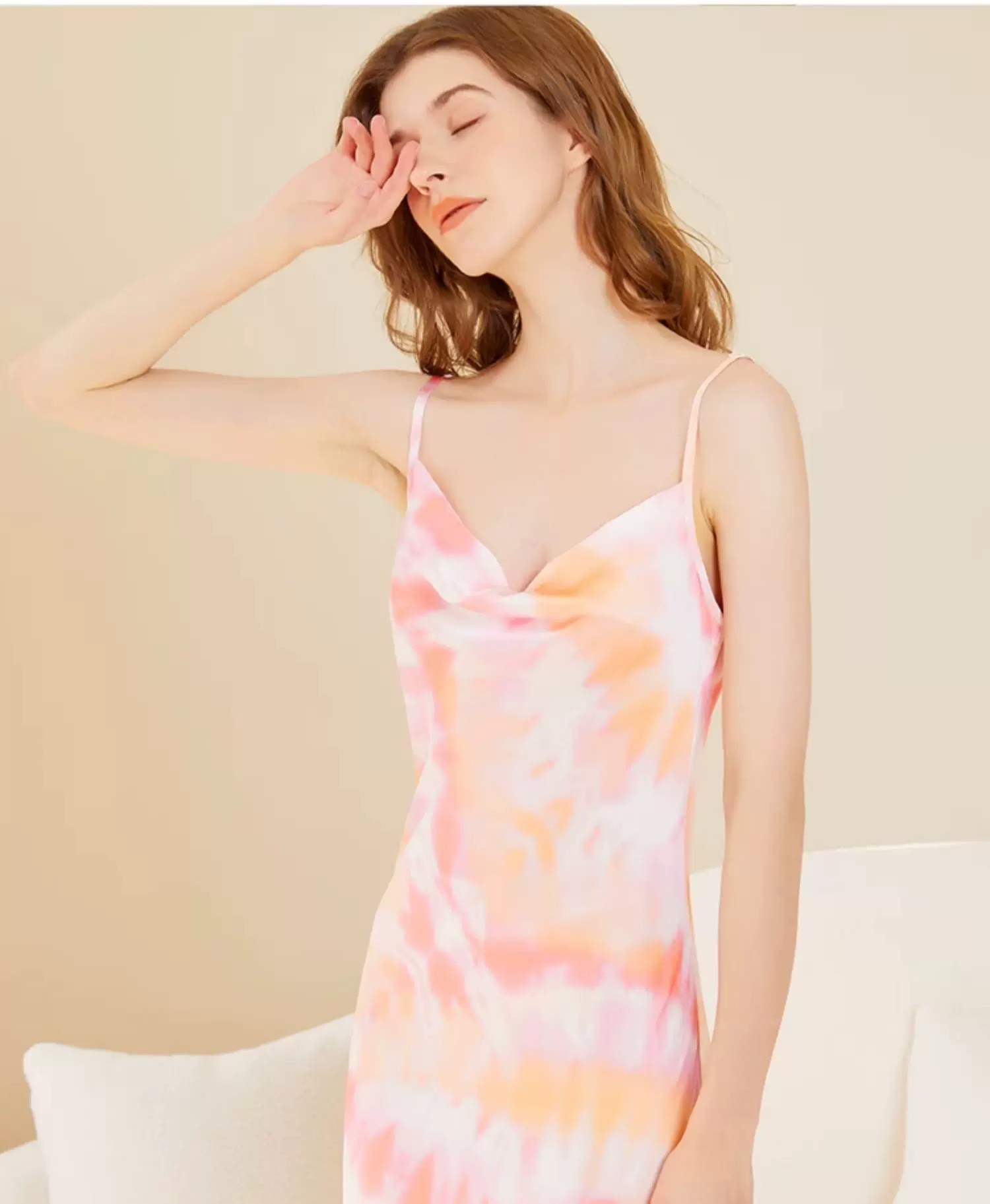
Day One: The Pink Dress Walk of Self-Consciousness
There is a particular kind of vulnerability that comes with stepping onto a city sidewalk in a hot pink dress at 8:15 in the morning, and it has nothing to do with the temperature. I had chosen a fitted midi-length number in a shade that can only be described as aggressively optimistic — the kind of pink that belongs on a bottle of children’s medicine or a 1980s jazzercise video. My usual uniform involves a rotating cast of navy, charcoal, and the occasional olive green when I am feeling wildly adventurous. Walking past the coffee shop where the barista knows my order by heart, I caught his double-take in the reflection of the pastry case. He did not say anything, but the look registered somewhere between confusion and amusement, like a dog tilting its head at an unfamiliar sound. That first pink dress moment taught me something I had never fully appreciated about neutral clothing: it functions as social camouflage. You blend into the background of urban life, just another person in just another shade of gray. A pink dress revokes that privilege entirely. You become visible in a way that feels, at first, deeply uncomfortable — like someone turned up the brightness on your personal existence without asking permission. By lunchtime, three separate colleagues had commented on my outfit, two of them using the word “bold,” which is the professional equivalent of saying “I could never.” The pink dress was already doing its work.
The Pink Dress and the Weight of Gendered History
You cannot wear a pink dress for a month without eventually confronting the century of cultural baggage stuffed inside every seam. Pink was not always the color of femininity. In fact, according to fashion historian Valerie Steele, director of the Museum at the Fashion Institute of Technology, who discussed this in a widely cited Smithsonian Magazine interview about the history of pink, pink was considered a masculine color throughout much of the 19th century — a paler version of red, which represented military strength and masculine vigor. Baby boys were dressed in pink, while blue was reserved for girls because of its association with the Virgin Mary’s purity. The inversion happened gradually through the early 20th century, accelerated by department store marketing campaigns that saw commercial opportunity in color-coding an entire gender. By the 1950s, the pink dress had become a shorthand for a very specific kind of womanhood — domestic, decorative, and fundamentally unserious. Mamie Eisenhower’s 1953 inaugural gown, a pale pink peau de soie number covered in rhinestones, cemented pink as the official color of First Lady soft power, a tradition that has persisted across political lines for seven decades. Every time I pulled on a pink dress during this experiment, I was stepping into that lineage whether I wanted to or not. The fascinating twist is that what was once a tool of gendered containment has become, in the hands of women today, something closer to a weapon.
What People Said to Me — And the Patterns I Could Not Ignore
After the first week, I started keeping a notes file on my phone documenting every unsolicited comment about my pink dress. The data was striking in its consistency. Men, almost without exception, framed their reactions around me personally — “You look nice today,” “That color really works on you,” “Someone’s feeling cheerful.” The pink dress became, in their framing, a reflection of my internal emotional state rather than a clothing choice. Women’s comments operated on an entirely different frequency. Female colleagues, strangers in elevators, the woman who runs the dry cleaner on my block — they all asked the same two questions in various phrasings: where did you get it, and how do you have the confidence to wear that. Where men saw a mood, women saw a decision. This tracks with research published in the Journal of Consumer Psychology, which found that observers consistently attribute higher levels of intentionality to women’s fashion choices than to men’s — a cognitive bias that means every pink dress I wore was being processed by onlookers as a deliberate statement rather than a simple preference. The study, conducted by researchers at Columbia Business School, analyzed over 3,000 participant responses to photographs of men and women in various clothing colors and found that women in pink were rated as significantly more “self-aware” and “socially strategic” than women in any other hue. I had not been making a statement. I had been wearing clothes. But the world refused to see the difference, and that refusal became the central tension of the entire experiment.
How My Body Language Shifted Without My Permission
Around day nine, something physiological started happening that I had not anticipated and could not control. I began walking differently. Not dramatically — nobody would have filmed it and called it a transformation — but my posture straightened, my stride lengthened slightly, and I stopped the habit of crossing my arms over my torso in meetings. This was not a conscious decision. I only noticed it because a friend I had not seen since before the experiment pointed it out over drinks. She said, without prompting, that I seemed to be taking up more space than usual, and she meant it as a genuine observation rather than a criticism. Psychologists have a term for this: enclothed cognition, a phenomenon first identified by researchers Hajo Adam and Adam Galinsky at Northwestern University in 2012 and published in the Journal of Experimental Social Psychology, which describes the systematic influence that clothes have on the wearer’s psychological processes. In their landmark study, participants who wore a white coat they believed belonged to a doctor demonstrated significantly higher sustained attention than those who wore the same coat but were told it belonged to a painter. The clothing itself did not change. The belief about what the clothing signified changed everything. My pink dress had become my white coat. Without any conscious effort, I had internalized the cultural signal that pink means visibility, and my body was responding to that signal by making itself slightly harder to overlook. I was not dressing for attention. My body had decided, independently, that attention had already arrived and it was time to meet it standing up straight.
The Pink Dress at Work: How One Color Changed My Professional Life
Workplace reactions to the pink dress experiment fell into three distinct categories that mapped almost perfectly onto organizational hierarchy. Senior leadership either said nothing at all or made brief, approving remarks that felt more like permission than compliment — a subtle signal that my visibility was not threatening to them. Peers at my level responded with a mix of curiosity and what I can only describe as vicarious living. Multiple colleagues pulled me aside to confess that they owned pink dresses they had never worn, items sitting in closets with tags still attached, waiting for an occasion brave enough to justify their existence. The most revealing reactions came from people junior to me. Several younger women in the office increased the color saturation of their own wardrobes over the course of the month, as if my pink dress had given them unspoken permission to stop dressing apologetically. By week three, I counted four additional pink items appearing in our open-plan workspace — two blouses, one pair of trousers, and a single hot pink blazer that arrived on a Tuesday and never left. This cascading effect is documented in organizational behavior research, specifically a 2023 analysis published by the Harvard Business Review that examined how fashion choices by visible team members influence broader workplace norms. The researchers found that a single colleague consistently wearing non-neutral colors increased color diversity across the entire team by an average of 23% within six weeks. My pink dress had accidentally become a leadership act. I had not asked for that role, but here we were.
The Retail Reality Behind Every Pink Dress You See
About halfway through the month, I became curious about what was actually happening in the market that made my experiment possible. The sheer volume of pink dresses available across every price point and retailer felt unprecedented, and as it turns out, it was. According to data from the retail analytics platform Edited, which tracks inventory and pricing across thousands of online fashion retailers globally, the number of pink dress styles available in the women’s category increased by 47% between the first quarter of 2023 and the same period in 2025. This was not a gradual shift. It was an explosion. The same dataset showed that pink dresses sold out at nearly twice the rate of black dresses during the same window, a statistic that would have been unthinkable a decade earlier when the little black dress still held unquestioned dominance over the special occasion market. What drove this shift was not a single cultural moment but a convergence of forces: the rise of dopamine dressing as a post-pandemic psychological coping mechanism, the mainstreaming of the Barbiecore aesthetic following the 2023 film’s $1.4 billion box office run, and a broader generational rejection of the idea that professional women should dress to minimize their visibility. The pink dress had become, in economic terms, a fully mainstream product category — not a trend item, not a seasonal novelty, but a permanent fixture of the modern wardrobe landscape. Understanding this changed how I felt about my own experiment. I was not an outlier. I was just slightly ahead of a curve that was already bending toward pink.
The Freedom That Arrived After Day Twenty
Something shifted around the third week. The self-consciousness that had defined the first fourteen days — the constant awareness of being looked at, the exhausting performance of confidence I did not yet feel — began to recede, replaced by something quieter and far more sustainable. I stopped noticing my own reflection in store windows. I stopped bracing for comments before they arrived. The pink dress had simply become what I wore, in the same way my navy sweaters used to be what I wore, and that normalization was, in retrospect, the entire point of doing this for a month rather than a week. Real change, the kind that sticks, requires duration. It requires pushing past the point where the novelty wears off and discovering what remains on the other side. What remained, for me, was a relationship with color that I had never allowed myself to develop. Before this experiment, I treated color in clothing the way some people treat hot sauce — nice in small quantities, best applied by someone else, and never, ever the main event. A pink dress forces the opposite orientation. Color becomes the architecture of the outfit rather than the accent, and that inversion rewires something fundamental about how you understand your own presentation to the world. I am not going to tell you that wearing pink dresses changed my entire life. That would be dishonest and also insane. But it changed something smaller and, in its own way, more important: it changed what I believed I was allowed to wear, which is really just a proxy for what I believed I was allowed to be. The two questions turn out to be essentially the same thing.
Day Thirty-One: What Happens When the Pink Dress Comes Off
On the first day after the experiment ended, I put on a gray sweater and black jeans and immediately felt like I had turned down the volume on my own life. Not in a bad way — more like walking out of a loud restaurant into a quiet street, that moment of sensory relief that is also slightly disappointing because the quiet reminds you that the noise was actually kind of fun. I kept the pink dresses, all seven of them. They hang together now in the right-hand section of my closet, a block of color that still catches me off guard when I open the door in the morning. I wear them maybe twice a week now, which feels like the right frequency — enough to remember what they taught me without letting the lesson consume my entire wardrobe. The most persistent change is not sartorial but perceptual. I notice color everywhere now, in other people’s clothing and in my own reactions to strangers on the street. A woman in a bright pink dress no longer registers as someone making a statement. She registers as someone who has figured something out — something about visibility, about taking up space, about refusing the quiet tyranny of the neutral palette that most of us accept without ever questioning. If there is a single takeaway from thirty days of deliberate pinkness, it is this: the clothes you wear are rarely just clothes. They are arguments you are making about who you are and what you deserve, and the pink dress makes a very specific argument that most women have been trained their entire lives to avoid. I am glad I stopped avoiding it, even if only for a month. Even if only to find out what was on the other side of all that color. If you are curious about how different shades of pink work across various styles and occasions, take a look at this comprehensive pink dress style breakdown that dives into the specifics I did not have space to cover here — from blush tones to bold fuchsia, there is a version of this color waiting for whatever version of yourself you are ready to meet.