

Styling the Perfect Corset and Skirt Combination
Fashion is a dialogue between the past and the present, a tangible expression of identity sculpted from fabric and form. Among the most evocative and powerful sartorial conversations one can have is through the pairing of a corset and a skirt. This combination is not merely about wearing two garments together; it is an act of architectural dressing, a deliberate crafting of silhouette that speaks to empowerment, history, and personal aesthetic. To master this look is to understand the engineering of the corset, the language of the skirt, and the alchemy that occurs when they are united. This exploration moves beyond fleeting trends, delving into the structural, historical, and stylistic principles that transform this duo from a simple outfit into a personal statement. We will navigate the objective mechanics of fit, the cultural weight each piece carries, and the practical artistry of combining them for occasions ranging from the defiantly everyday to the spectacularly formal.
The Architectural Foundation: Deconstructing the Corset
Before one can style a corset, it is imperative to comprehend what it is—and what it is not. Objectively, a corset is a structured garment, traditionally stiffened with boning (made of steel, synthetic polymers, or historically, whalebone), and fastened with laces or hooks at the back or front. Its primary function is to shape the torso, cinching the waist and supporting the bust to create a specific silhouette. This is not a matter of opinion but of garment construction. As noted by the Victoria and Albert Museum in London, a global authority on fashion history, the corset’s evolution reflects changing ideals of the body, from the conical shapes of the 16th century to the hourglass emphasis of the 19th century. The modern interpretation, often called a “fashion corset” or “waspie,” draws directly from this lineage but is frequently designed for aesthetic impact rather than radical, daily waist training. The scientific principle at play is one of distributed pressure and skeletal realignment (within safe, short-term limits), a fact discussed in historical medical texts and modern analyses of period dress. When you choose a corset, you are not just selecting a top; you are choosing an exoskeleton that will redefine your posture and profile. The key is fit: a well-made corset should feel like a firm embrace, not a constriction, with the laces allowing for adjustable tension. This foundational understanding separates a costumed look from an authentically styled one.
The Canvas of Movement: Understanding the Skirt’s Role
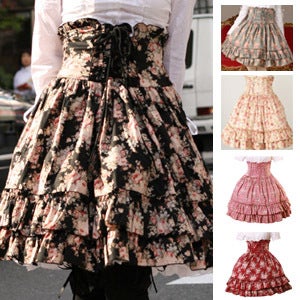
If the corset is the architecture, the skirt is the landscape. Its function is one of contrast and complement, providing balance, movement, and context. The skirt’s silhouette, length, and volume are variables that directly counterpoint or amplify the corset’s rigid, defined form. From a design theory perspective, this is a classic play of opposites: structured versus fluid, controlled versus free. A voluminous, tiered prairie skirt creates a romantic, grounded contrast to a sleek, satin corset, a style echoed in the ethereal aesthetics of the Lolita fashion subculture, well-documented on platforms like Lolibrary. Conversely, a pencil skirt that follows the lines of the body creates a continuous, powerful, and streamlined silhouette, a look championed by mid-century style icons and modern power dressers alike. The choice of skirt dictates the overall vibe. A scholarly article from the Fashion Institute of Technology’s database might analyze the skirt’s hemline as a social indicator, but for our purposes, it is a tool for proportion. The skirt’s waistline is the critical junction; it must meet the corset’s lower edge cleanly, whether tucked under, layered over, or sitting flush against it. This seamless integration is what elevates the combination from two separate items into a single, intentional ensemble.
Historical Echoes and Modern Voice
The potency of the corset and skirt pairing is deeply rooted in cultural memory. We cannot style in a vacuum. The image of the cinched waist and full skirt is imprinted on our collective consciousness through paintings, literature, and film. Think of Scarlett O’Hara gripping the bedpost in Gone with the Wind, a cinematic moment that forever linked the corset with both extreme femininity and formidable will. Yet, this history is dual-edged. The corset has been a symbol of oppression and a tool of empowerment, a paradox explored by academics like Valerie Steele, director of The Museum at FIT, who argues in her book The Corset: A Cultural History that its narrative is far more complex than simple subjugation. Today, wearing this combination is a reclamation. It is a conscious engagement with history, often with a twist. The punk movement of the 1970s, exemplified by figures like Vivienne Westwood, took the corset out of the boudoir and into the streets, pairing it with torn tartan skirts to spit at convention. When you don a corset and skirt today, you are participating in this ongoing dialogue. You are referencing these layers of meaning, whether you align with the romantic, the rebellious, or the avant-garde. This knowledge isn’t just academic; it informs your styling choices, allowing you to craft a look that speaks with intention rather than accident.
The Stylist’s Toolkit: Five Principles for Perfect Pairing
With foundation and context established, we move to application. Here are five guiding principles for creating your perfect corset and skirt combination.
1. Silhouette Synergy: Balancing Proportions
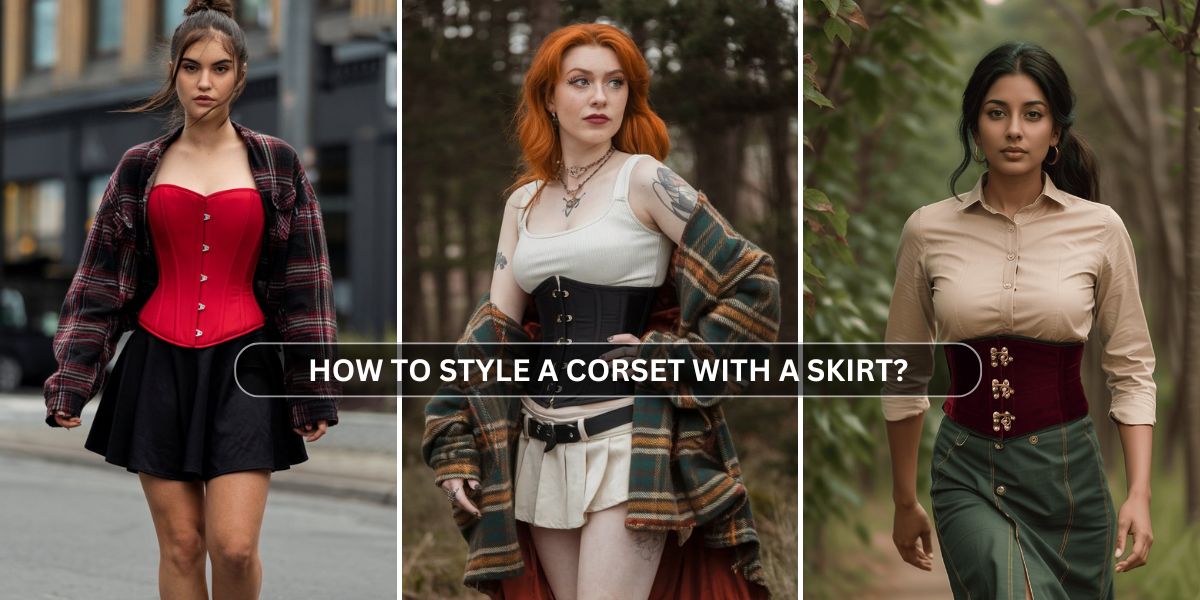
The most critical rule is balance. A corset naturally draws attention to the smallest part of your torso. Your skirt choice should harmonize with this focal point. If your corset is an underbust style ending at the waist, a high-waisted skirt that begins precisely at the corset’s lower edge creates a flawless, elongated line. For an overbust corset that covers the bust, consider the volume below. A very full, A-line or circle skirt creates a dramatic, hourglass shape reminiscent of 1950s Dior’s “New Look”—a silhouette that has been endlessly analyzed in fashion literature for its post-war symbolism of optimism and luxury. Conversely, a straight or pencil skirt maintains the vertical emphasis, resulting in a sleek, modern column that is powerfully chic. The mistake to avoid is a skirt that adds bulk at the wrong point; the eye should travel smoothly from the cinched waist outward or downward, not be interrupted by a mismatched seam or awkward puff of fabric.

2. Texture and Fabric Dialogue
Fabric tells a story. The inherent structure of a corset often involves materials like brocade, satin, leather, or heavy cotton. Your skirt should converse with these textures, not clash with them. A brocade corset paired with a delicate chiffon skirt creates a fascinating interplay of opulence and airiness, a contrast often seen in haute couture. A sleek leather corset over a flowing viscose maxi skirt blends edge with elegance. Consider also the season and context. Heavy wool or velvet skirts anchor a look for winter, while light linen or cotton skirts suit summer. This dialogue extends to formality. As fashion commentator Tim Gunn often emphasized on Project Runway, “Make it work” by ensuring the formality levels align. A beaded, couture-level corset likely demands a skirt of comparable refinement, not casual denim.
3. The Color Theory Approach
Color can unify or strategically separate. A monochromatic look—a black corset with a black skirt of different textures—is effortlessly sophisticated and slimming, creating a single, powerful column of color. For a more dynamic statement, employ complementary or analogous color schemes. A burgundy corset with a forest green skirt draws on rich, historical palettes, while a pastel corset with a white skirt feels fresh and romantic. Don’t neglect the power of print. A solid-color corset is the perfect anchor for a boldly printed skirt, allowing the pattern to take center stage without overwhelming the entire look. The corset acts as a visual pause, framing the print beautifully.
4. Layering and Modern Context
The true test of modern styling is integrating this historically rich duo into contemporary life. The key is layering and context. For a bold daytime look, wear a cotton corset as a bustier over a simple blouse, paired with a midi denim skirt—it’s historical edge meets casual cool. For the office, a tailored, sleeveless corset top (structured like a corset but without laces) tucked into a high-waisted, knee-length pencil skirt projects authoritative polish. Evening wear is where the combination truly shines: a jewel-toned satin corset with a matching or dramatically contrasting full-length taffeta skirt is a guaranteed showstopper. The insight from street style blogs and platforms like Quora often highlights this adaptability: the outfit’s success lies in its perceived intentionality. It should look like a choice, not a costume.

5. The Finishing Alchemy: Accessories and Attitude
No corset and skirt ensemble is complete without the final notes. Footwear dictates the stance: Victorian-style boots reinforce a historical or gothic vibe, sleek stilettos modernize and elongate, and chunky sneakers inject deliberate, anachronistic cool. Jewelry should be considered. A choker naturally complements the neckline framed by an overbust corset, while long pendants can draw the eye vertically. Ultimately, the most crucial accessory is confidence. This look commands a presence, a fact echoed by countless style icons from Dita Von Teese, a modern burlesque performer who has authored books on glamour, to Lady Gaga, who uses the corset as a symbol of artistic armor. As Von Teese has stated in interviews, “It’s about the transformative power of clothing.” Wearing this combination well requires embracing that transformation, carrying the silhouette with the posture and assurance it inherently demands.
Investing in Your Silhouette: Knowledge as the Ultimate Discount
Embarking on the journey of the corset and skirt requires an investment, but the most valuable currency is knowledge, which ultimately leads to smarter spending. A well-constructed corset from a reputable maker, using proper steel boning and sturdy materials, is a piece that will last for years, unlike fast-fashion imitations that warp and fail. Understanding your measurements and the difference between “off-the-rack” and “made-to-measure” can save costly disappointment. This is where professional knowledge pays dividends. Seek out specialty retailers or artisans who understand garment construction; their expertise is worth the premium, ensuring safety, comfort, and aesthetic success. Similarly, investing in a few high-quality, versatile skirts in neutral colors or classic silhouettes provides endless pairing options. View these pieces as foundational elements of a capsule wardrobe that prizes drama and definition. The “discounted price” comes not from chasing cheap goods, but from making informed, lasting purchases that transcend seasons. You are not just buying clothes; you are acquiring tools for self-expression, built on a foundation of historical understanding and stylistic principle.
The perfect corset and skirt combination is more than an outfit—it is a crafted identity. It begins with respecting the engineering of the corset and the language of the skirt, learns from the deep cultural currents they navigate, and is realized through deliberate choices of proportion, texture, and color. It is a look that can be adapted from street to soirée, always rooted in the powerful dialogue between structure and flow. When you fasten that final hook or tie that last lace, you are not just getting dressed. You are assembling an attitude, a piece of living history, and a silhouette that is unequivocally, powerfully your own.