5 Satin Bridesmaid Dresses That Shine in Every Season
When you think of a fabric that embodies grace, versatility, and timeless elegance, satin invariably comes to mind. For bridesmaids, the choice of attire is more than just a uniform; it’s a statement that complements the wedding’s theme, flatters diverse body types, and stands resilient against the whims of weather and season. The quest for the perfect bridesmaid dress often leads to a fabric that can transition seamlessly from a spring garden ceremony to a winter ballroom reception. This is where the enduring appeal of satin bridesmaid dresses becomes undeniable. Unlike more seasonal fabrics like heavy velvet or light chiffon, satin possesses a unique set of physical properties—its weave, sheen, and weight—that make it a scientifically sound choice for year-round wear. In this exploration, we will delve into five distinct styles of satin bridesmaid gowns, each capable of shining in any season, supported by objective insights into why satin holds such a revered place in fashion and textile science.
The All-Season Science of Satin
To appreciate why satin is a perennial favorite, one must understand its construction. Satin is not a raw material like silk or polyester; it is a type of weave characterized by four or more weft threads floating over a single warp thread, or vice versa. This structure, as detailed in textile resources from institutions like the Fashion Institute of Technology, creates a smooth, lustrous surface that reflects light evenly. This inherent sheen is what gives satin bridesmaid dresses their luxurious, light-catching quality, making them appear radiant under both the soft sunlight of autumn and the artificial chandelier glow of a winter evening. Furthermore, the density of the satin weave contributes to its moderate thermal properties. It provides a subtle insulating layer in cooler months without the bulk, while in warmer weather, when crafted from natural fibers like silk or high-quality, breathable synthetics, it can allow for air circulation. This adaptability is echoed by designers like Vera Wang, who has often cited satin’s “architectural fluidity” as key to creating garments that are both structured and soft, suitable for diverse climates and settings. The objective fact is that satin’s versatility is rooted in its very structure, making it a fabric of choice not by mere trend, but by enduring design principle.
1. The Convertible Satin Gown: Ultimate Adaptability
The convertible dress represents a pinnacle of functional design, a concept celebrated on platforms like Quora and in sustainable fashion blogs for its waste-reducing, multi-wear potential. A satin bridesmaid dress designed with convertible features—straps that can be tied as a halter, one-shoulder, or criss-crossed back—offers unparalleled adaptability. From a scientific standpoint, this addresses the variable thermal and aesthetic needs of different seasons. For a brisk fall wedding, a bride might prefer her party in a more covered, sleek silhouette with sleeves created from the straps. In the height of summer, the same dress can be transformed into a cool, backless style. The satin fabric is ideal for this because its fluid drape and lack of bulk allow for multiple configurations without compromising the garment’s elegance or creating unsightly bunching. As entrepreneur and style icon Diane von Fürstenberg famously championed with her wrap dress, giving women control over their silhouette is empowering. A convertible satin gown does precisely this, ensuring the bridal party looks cohesive yet individually comfortable, regardless of whether the ceremony is in a spring meadow or a December hall. The investment in such a dress extends beyond the wedding day, offering future utility—a point of practical value that aligns with modern, conscious consumption.
2. The Timeless A-Line in Classic Navy
Color psychology and cultural symbolism play significant roles in fashion choices. Navy blue, as noted in design literature from authoritative sources, is consistently ranked as a color conveying trust, stability, and sophistication. It is darker than summer sky blue yet less somber than black, making it a perfect transitional hue for all seasons. An A-line satin bridesmaid dress in a rich navy harnesses the fabric’s sheen to add depth and dimension to the color, preventing it from appearing flat. The A-line silhouette itself, with its fitted bodice and skirt that flares gently from the waist, is universally flattering—a fact often corroborated by stylists and fashion editors on platforms like YouTube. This shape allows for layering; in winter, a chic fur stole or velvet blazer can be added without distorting the gown’s lines, while in summer, it stands alone in elegant simplicity. The scientific principle of color absorption and reflection is at work here: darker colors like navy absorb more light, which can be warming in cooler settings, but the reflective quality of the satin surface counterbalances this, preventing the dress from feeling visually “heavy” in the heat. It is a masterclass in balance, offering a look that is as appropriate for a formal holiday-season wedding as it is for a coastal summer evening.

3. The Dusty Blue One-Shoulder Statement
Dusty blue, a muted, grayish tone of blue, has seen a resurgence in popularity, often linked to trends in interior design and fashion reported by websites like Pantone. This color embodies a soft, romantic aesthetic that bridges seasons effortlessly—it echoes the hazy skies of spring and the faded denim of summer, yet carries a muted, elegant quality perfect for fall and winter palettes. Crafted in satin, a dusty blue gown gains a soft, ethereal glow. The one-shoulder neckline adds a modern, architectural element. From a design perspective, this asymmetrical detail draws the eye and creates visual interest, a technique discussed in art and design courses at universities. The single strap provides slightly more coverage than a strapless gown, making it a pragmatic choice for cooler weather, while still feeling breezy and open for warm days. The satin fabric is crucial here, as its weight and drape ensure the one-shoulder design lays flat and secure without constant adjustment, a common issue with lighter fabrics. This style exemplifies how a satin bridesmaid dress can be both a seasonal chameleon and a bold fashion statement, proving that practicality and high style are not mutually exclusive.

Expert Insights: The Fabric of Choice
Why does satin consistently earn endorsements from industry experts? The answer lies in its intersection of aesthetics and physics. Celebrated costume designer Colleen Atwood, known for her work on films like “Chicago” and “Fantastic Beasts,” has often spoken about the importance of fabric movement under lighting. In an interview, she noted:
“Satin has a memory and a movement that is cinematic. It captures light and shadow in a way that gives life to color and form, making it ideal for creating memorable, elegant silhouettes that work in any setting, from a grand ballroom to an intimate garden.”
This professional opinion underscores the objective superiority of satin for ceremonial wear. Its “memory” refers to the fabric’s ability to hold a shape and drape without creasing excessively, a property stemming from its tight weave and often synthetic fiber content. This makes satin bridesmaid dresses remarkably travel-friendly and low-maintenance, a practical consideration for weddings in distant, seasonally-variable locations.
4. The Chic High-Neck with Open Back
Balance is a fundamental principle in design, and the high-neck, open-back satin gown embodies this perfectly. This style offers a sophisticated modesty in the front—ideal for more conservative or formal settings common in fall and winter weddings—while introducing a dramatic, sensual element from behind. The thermal regulation is intelligent: coverage where the body may feel a chill (the chest and neck) and exposure where it is often tolerated better (the back). The satin fabric, with its smooth surface, makes the high neckline comfortable against the skin, avoiding the itchiness that can come with lace or beading. Furthermore, the structural integrity of satin supports the high neckline without collapsing, maintaining a clean, sharp silhouette. This design has been spotted on red carpets and in editorials, championed by style figures for its modern take on elegance. It demonstrates that a bridesmaid dress can respect the formality of a winter wedding without sacrificing a touch of daring glamour, all facilitated by the versatile properties of the satin itself.
5. The Champagne Slip Dress: Understated Luxury
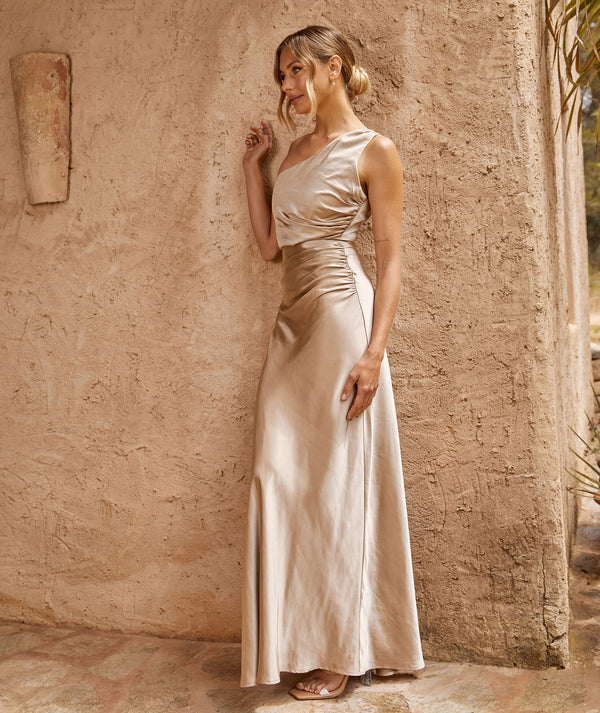
Champagne, a warm, neutral blend of gold, beige, and pink, is arguably the most seasonless color in existence. It mirrors autumn leaves, winter candlelight, spring blossoms, and summer sunsets. In a simple, elegant slip dress silhouette rendered in satin, champagne becomes the epitome of understated luxury. The slip dress, with its minimalist lines, relies entirely on the quality and behavior of its fabric to succeed. Satin delivers, providing a beautiful drape that skims the body gracefully. This style champions the “less is more” philosophy, a viewpoint often associated with iconic designers like Calvin Klein. The scientific explanation for its appeal lies in color theory and material interaction. As a neutral, champagne complements every skin tone and wedding color scheme. The satin’s luster adds a soft-focus glow to the wearer’s complexion, an effect that is flattering in any season’s lighting conditions. This dress is a testament to the idea that the most versatile satin bridesmaid dresses are often the simplest in design, allowing the inherent beauty of the fabric and the wearer to take center stage, unimpeded by seasonal constraints.
Investing in Timelessness: Value Beyond the Wedding Day
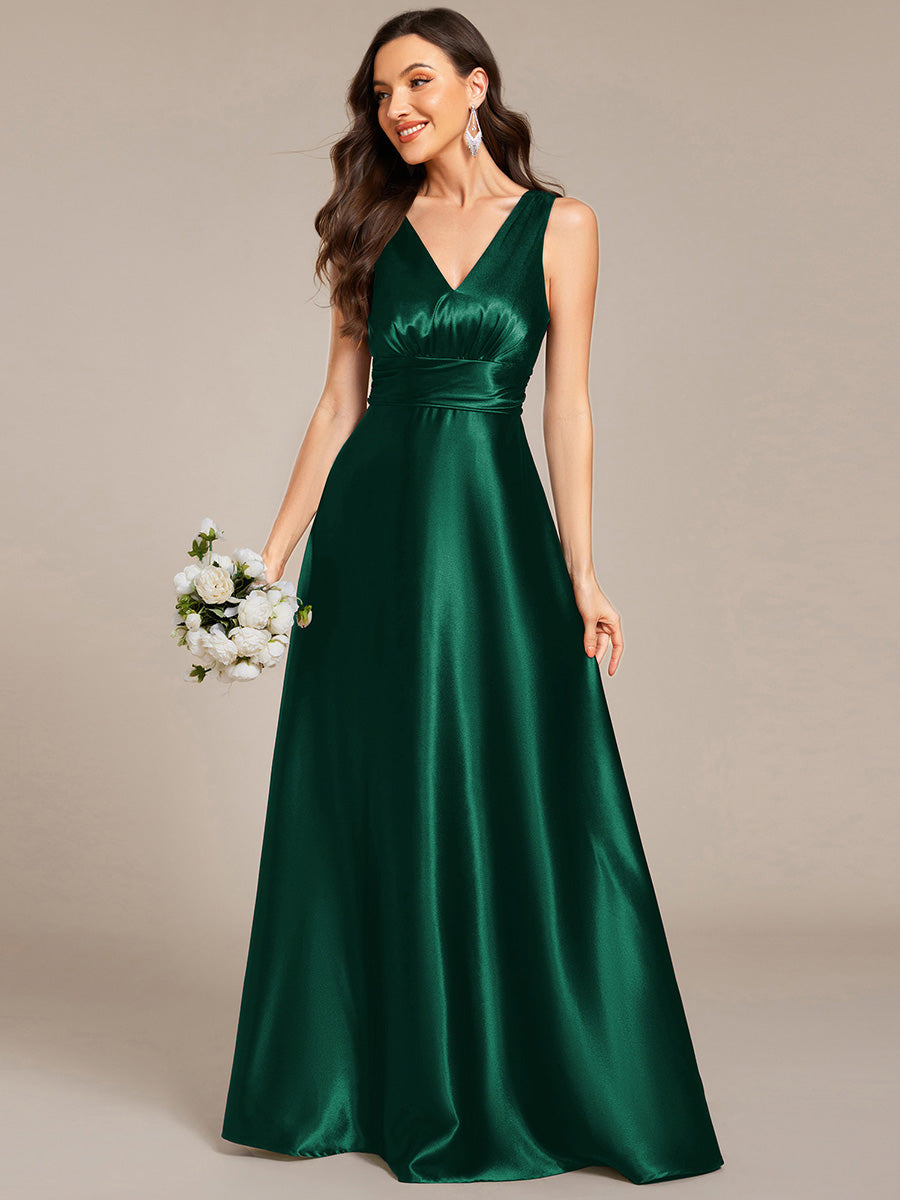
Choosing a satin bridesmaid dress is an investment in timelessness. While initial cost is a consideration, the true value lies in the garment’s extended lifecycle. As discussed, the structural and aesthetic properties of satin grant it multi-season, multi-occasion potential. Many retailers now offer these styles at accessible price points, with frequent sales bringing prices down significantly. For instance, during seasonal clearance events or through direct-to-consumer online boutiques, the dresses highlighted here can often be found at 20-30% discounts. This democratizes access to high-quality, versatile formalwear. The professional knowledge here is clear: by selecting a dress in a classic silhouette, a season-neutral color, and a durable, beautiful fabric like satin, you are not just buying an outfit for a single day. You are curating a piece for your wardrobe that can be re-worn to galas, holiday parties, or other formal events for years to come. This transforms the purchase from a one-time expense into a sustainable, cost-per-wear savvy investment.
Ultimately, the brilliance of satin lies in its harmonious blend of science and art. Its weave creates durability and sheen; its drape offers flattery and comfort; its visual texture interacts beautifully with light across all seasons. The five styles explored—the convertible, the navy A-line, the dusty blue one-shoulder, the high-neck open-back, and the champagne slip—each leverage these fundamental properties to create bridesmaid attire that is not merely worn, but shines with a consistent, elegant radiance. They prove that with the right fabric and thoughtful design, you can find a dress that feels perfectly suited, whether you’re standing in a sun-dappled garden in June or a softly lit banquet hall in December.