

The Ultimate Guide To Finding Your Perfect Cup Bra Size
For generations, women have struggled with the elusive quest for the perfect bra. The journey through the maze of cup bras sizes often feels like navigating uncharted territory, leaving many settling for discomfort as their normal. Yet, the difference between an ill-fitting bra and one that fits perfectly transcends mere comfort—it transforms how you carry yourself through the world. This guide isn’t about following generic advice; it’s about understanding the scientific principles and anatomical realities that govern bra fitting. We’ll dismantle common misconceptions and provide you with tools to become an expert in your own right, ensuring that every bra you own becomes a source of confidence rather than compromise.
The Foundation: Understanding Band and Cup Dynamics
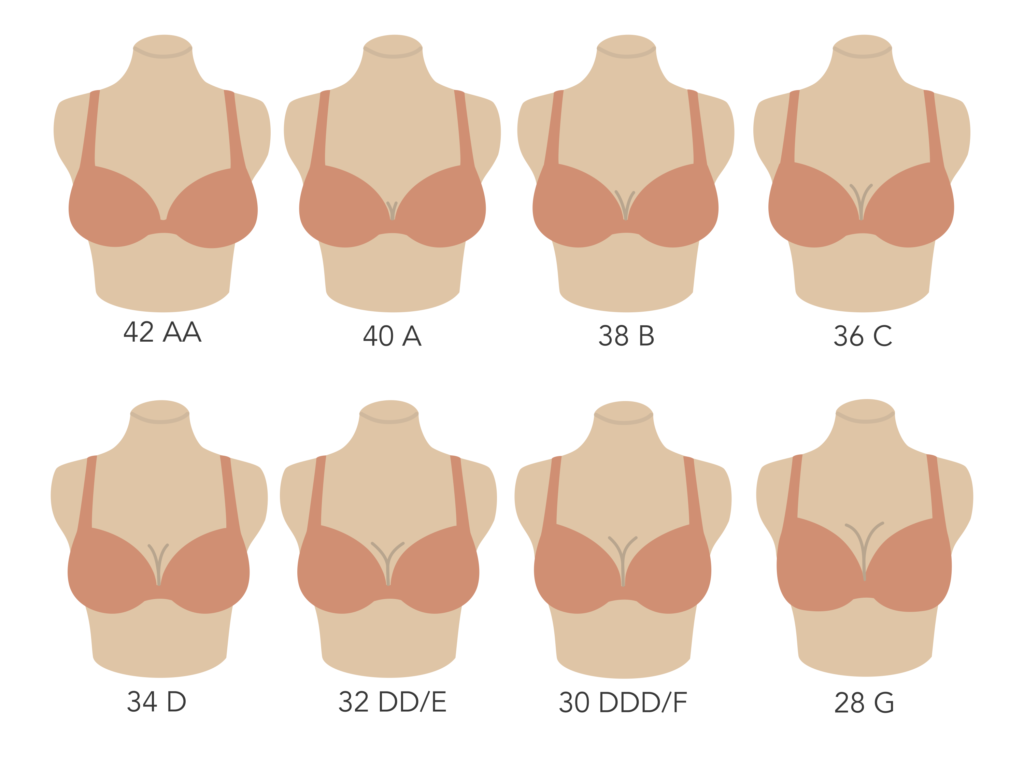
The relationship between band size and cup volume represents the most critical yet misunderstood aspect of bra fitting. Many assume that cup size exists independently, when in reality, cup bras sizes are relative to band measurement. A D cup on a 32-band frame holds significantly less volume than a D cup on a 38-band frame, which explains why sister sizing—moving up in band while decreasing cup, or vice versa—sometimes works. The band provides approximately 80% of a bra’s support, according to research from the University of Portsmouth’s Breast Health Research Group, making proper band fit non-negotiable. When testing band fit, fasten the bra on the loosest hook initially—this allows for natural fabric stretching over time. The band should sit parallel to the floor without riding up, and you should be able to slide only one or two fingers comfortably beneath it. Meanwhile, the cups should encapsulate breast tissue completely without gaping, spillage, or compression. Understanding this symbiotic relationship between band and cup marks the first step toward mastering cup bras sizes that truly work with your body rather than against it.
:max_bytes(150000):strip_icc()/how-to-measure-bra-size-chart-cup-size-finder-05f3c49d140c45acbf99d7ff16307e0d.jpg)
The Measurement Myth: Why Tape Measures Don’t Tell the Whole Story
Traditional bra fitting methods that rely solely on tape measurements often lead women astray, creating frustration with inconsistent cup bras sizes across different brands. The standard calculation of subtracting bust measurement from underbust measurement to determine cup size fails to account for breast shape, density, and root width—factors that significantly impact how a bra fits. As noted by lingerie expert Cora Harrington in her book “The Lingerie Handbook,” “Measurements provide a starting point, not a destination.” Breast tissue distribution varies dramatically; some women have more projected breasts that stand farther from the chest wall, while others have shallow breasts with wider roots that require different cup geometries. Additionally, hormonal fluctuations throughout your menstrual cycle can change breast volume by up to 15%, according to research published in the Journal of Obstetrics and Gynaecology. This biological reality means your perfect cup bras sizes might fluctuate, necessitating different fits at different times. Rather than treating measurements as absolute truth, use them as a preliminary guide before progressing to the more revealing stage of trying on multiple sizes and styles to observe how they interact with your unique breast characteristics.
Beyond the Alphabet: Demystifying Cup Progression
The cultural fixation on cup letters has created unnecessary anxiety around cup bras sizes, with many women clinging to outdated notions about what constitutes a “normal” cup size. In reality, cup progression follows a logical pattern where each letter represents approximately one additional inch of difference between bust and underbust measurements. However, this system becomes more complex beyond DD cups, with sizing conventions varying by country and brand. British sizing typically progresses: D, DD, E, F, FF, G, GG, H, HH, while US sizing often uses: D, DD/E, DDD/F, G, H, I, J. This inconsistency explains why a woman might wear different cup bras sizes in different lingerie lines. Furthermore, societal perceptions lag significantly behind reality—the average bra size in many Western countries has increased to around 34DD or 36DD, according to lingerie industry analytics, yet many women remain in incorrectly sized cups due to stigma or limited size availability. Understanding that cup letters are simply arbitrary markers in a continuous spectrum of breast volumes liberates you from preconceived limitations and opens up a world of properly fitting options.

The Shape Spectrum: How Breast Morphology Dictates Your Ideal Bra
While much attention focuses on cup bras sizes, breast shape represents an equally critical component of finding your perfect fit. The same volume of breast tissue can be distributed in dramatically different ways—shallow with a wide root, projected with a narrow root, full on top versus bottom, or asymmetrical. These variations explain why two women with identical measurements might require completely different bra styles. For instance, women with shallow breast tissue that spreads across a larger area of their chest wall often find that standard cup bras sizes gap at the top, leading them to mistakenly size down in cups. In reality, they may need wider wires and more open-centered cups to properly accommodate their tissue distribution. Conversely, those with projected breasts that stand prominently from the chest wall frequently experience spillage in bras that are too shallow, even when the volume measurement suggests the cup should fit. Recognizing your breast shape allows you to select bras engineered for your specific morphology, transforming the shopping experience from guesswork to strategic selection.
Engineering Comfort: How Bra Construction Complements Anatomy
Modern bra design incorporates sophisticated engineering principles that interact dynamically with cup bras sizes to provide support and shaping. Underwire, when properly fitted, follows your breast’s natural root (the point where breast tissue connects to the chest wall), providing a foundation that redistributes weight across your frame rather than relying solely on shoulder straps. The center gore—the fabric bridge between cups—should lie flat against your sternum in properly fitted cup bras sizes. If it pulls away, this often indicates insufficient cup depth or too small a band. Similarly, side wings (the panels extending from cups to back band) should be wide enough to contain breast tissue that migrates toward the armpits, a common issue for women wearing too-small cups for extended periods. As bra technology evolves, new materials and construction techniques continue to refine how cup bras sizes interact with diverse body types. Memory foam adapts to temperature and pressure, spacer fabric provides molding without bulk, and innovative elastics offer consistent support without digging—all representing advancements that make finding your perfect fit more achievable than ever before.

The Fitting Room Revelation: Practical Steps to Determine Your True Size
Translating measurement theory into practical fitting requires a systematic approach to trying on cup bras sizes. Begin with your calculated size, then try the same bra in at least three different sizes: your measured size, one cup size larger, and one band size smaller with a corresponding cup adjustment. Pay attention to how the bra feels immediately upon fastening—discomfort rarely improves with wear. Perform the “scoop and swoop” technique by leaning forward, placing your hand in the cup, and gathering all breast tissue forward from your sides and underneath. This ensures all migratory tissue resides within the cups, often revealing that you need a larger cup than initially assumed. Observe how the bra behaves as you move—raise your arms, bend forward, twist side to side. The band should remain stable, and cups should contain without constricting. As renowned fitter Judy Ravel explained in her fitting seminars, “A bra that only fits when you stand perfectly still doesn’t fit at all.” This comprehensive assessment method transcends the limitations of static measurements and acknowledges that cup bras sizes must accommodate your dynamic, living body.
Beyond Basics: Specialized Bras for Different Life Stages and Activities
Your relationship with cup bras sizes evolves throughout your life, with hormonal changes, weight fluctuations, pregnancy, breastfeeding, and menopause all impacting breast size and sensitivity. During pregnancy, breasts can increase multiple cup sizes, often requiring more flexible constructions like maternity bras with additional hook settings for expansion. Nursing bras incorporate mechanisms for one-handed access while maintaining support—a crucial feature during nighttime feedings. Post-menopause, changing breast composition often necessitates reassessment of cup bras sizes as glandular tissue is replaced by fattier tissue with different support requirements. Similarly, athletic pursuits demand specialized sports bras that minimize breast movement—reducing potential damage to Cooper’s ligaments according to research from the University of Portsmouth—while providing moisture-wicking properties. Understanding that no single bra serves all purposes empowers you to build a lingerie wardrobe with specialized cup bras sizes and styles for different contexts, ensuring optimal support and comfort through every life phase and activity.
The journey to finding your perfect cup bras sizes represents both a science and an art—blending precise measurement with intuitive understanding of your unique form. This knowledge transforms bra shopping from a chore into an act of self-care, where each properly fitted garment becomes an investment in daily comfort and long-term breast health. Armed with these principles, you possess the tools to navigate the world of lingerie with confidence, discerning what works for your body amidst marketing claims and sizing inconsistencies. The perfect bra exists not as a mythical ideal, but as an achievable reality when you understand how to interpret the language of fit.