

A Guide to Cup and Bra Sizes
Finding the right bra is not merely a matter of fashion; it is a fundamental aspect of personal comfort, health, and confidence. Yet, the world of cup bras sizes remains shrouded in confusion and misconception for many. This guide aims to demystify the process, moving beyond vague notions of “fit” to provide a clear, scientific, and practical roadmap. We will dismantle the myths, explain the measurements, and empower you with the knowledge to make informed choices that bring both professional expertise and the promise of genuine comfort into your daily life.
The Foundation: Why Accurate Sizing Matters
Wearing an incorrectly sized bra is far more common than most realize, and the consequences extend beyond simple discomfort. From a physiological perspective, a poorly fitting bra can lead to a range of issues. The shoulder straps of a too-small cup or too-large band can dig into the skin, causing grooves and pain. Lack of proper support from an ill-fitting band can contribute to poor posture, leading to chronic back, neck, and shoulder strain. As noted in literature from authoritative institutions like the University of Portsmouth’s Research Group in Breast Health, proper breast support is crucial during physical activity to minimize pain and potential long-term tissue damage. Furthermore, the psychological impact is significant. A bra that fits well forms a smooth foundation for clothing, enhancing silhouette and boosting self-assurance. Conversely, one that gaps, spills, or rides up can be a constant source of self-consciousness. Understanding your true cup bras sizes is, therefore, the first and most critical step toward resolving these issues. It transforms the bra from a necessary garment into a tool for well-being.

Decoding the Numbers and Letters: A Scientific Breakdown
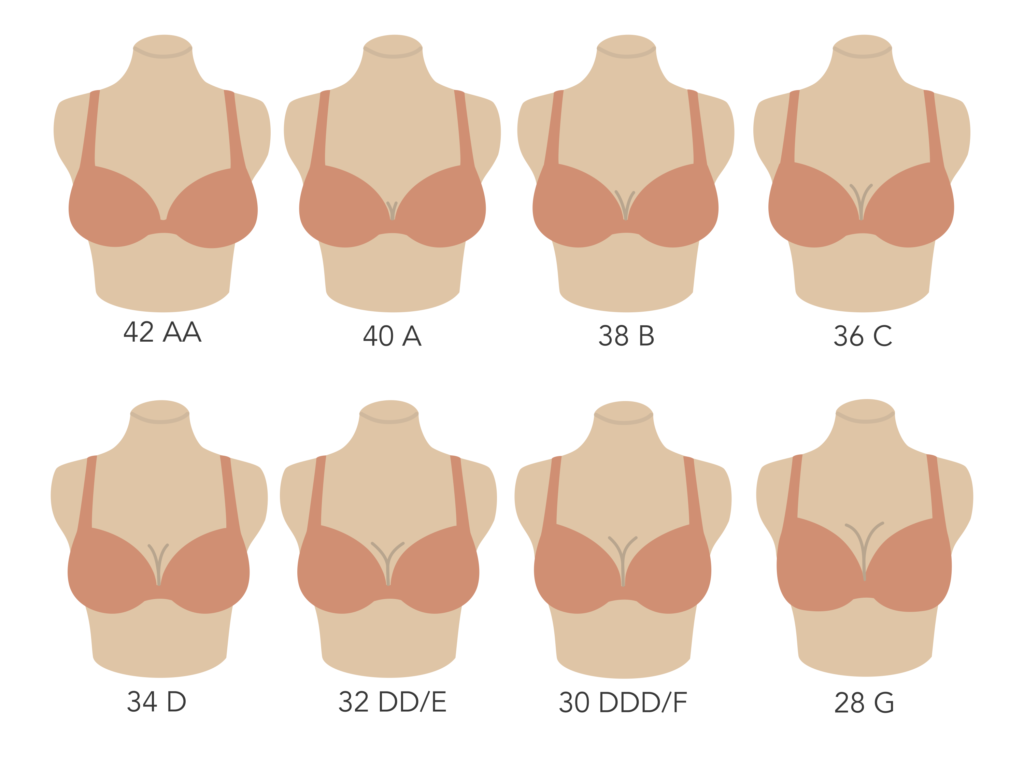
The alphanumeric code of a bra size—like 34C or 38F—is not arbitrary. It is a precise, if often misunderstood, system. The number (the band size) represents the circumference of your ribcage directly under your bust, measured in inches or centimeters. The letter (the cup size) is not an absolute volume but a relative one. It indicates the difference between your full bust circumference (measured at the fullest part) and your underbust band measurement. Each inch (or approximately 2.54 cm) of difference corresponds to a cup letter. For instance, a 1-inch difference is an A cup, 2 inches is a B cup, and so forth. This is a globally recognized principle, detailed on platforms from Wikipedia to professional lingerie fitting manuals. A crucial, often overlooked fact is that cup size is proportional to band size. The cup volume on a 34D is not the same as on a 38D; the latter has a larger cup volume because the same letter is attached to a larger band. This is why simply “going up a cup” without adjusting the band rarely solves fit problems. A proper understanding of this relational system is key to navigating cup bras sizes effectively.
:max_bytes(150000):strip_icc()/how-to-measure-bra-size-chart-cup-size-finder-05f3c49d140c45acbf99d7ff16307e0d.jpg)
The Step-by-Step Measurement Protocol
To find your starting point, you will need a soft measuring tape. First, measure your underbust snugly but not tightly. Ensure the tape is level all around your body. This measurement in inches is your potential band size (if it’s an odd number, you may need to try the adjacent even sizes). Next, measure your bust at its fullest point, typically across the nipples, with the tape parallel to the floor and without compressing the tissue. Do not lean forward, as this can exaggerate the measurement. Subtract the underbust measurement from the bust measurement. The difference determines your cup letter. Refer to a standard chart: 0-1 inch = AA/A, 2 inches = B, 3 inches = C, 4 inches = D, 5 inches = DD/E, and so on. Combine the band size with the cup letter for your preliminary size. Remember, this is a starting point, not a definitive answer. Body shape, breast density (the ratio of glandular to fatty tissue), and personal comfort preferences mean the calculated size is a guideline. The real test is in the fitting room.
Beyond the Tape: The Art of the Fit Check
Knowing your calculated size is half the battle; knowing how a bra should feel when it fits is the other. When you try on a bra, start by fastening it on the loosest hook. New bras should be snug here, as the elastic will naturally stretch over time. The band should sit horizontally around your torso, providing the majority (about 80%) of the support without riding up. You should be able to slide only one or two fingers underneath it comfortably. The center gore (the piece between the cups) must lie flat against your sternum. If it floats away, the cups are likely too small or shallow. The underwire, if present, should encase all breast tissue at the sides and front without sitting on it. Now, for the cups: they should contain your breasts fully without gaping, wrinkling, or spillage (often called “quad-boob”). A smooth line should run from the cup into your chest. As lingerie experts frequently emphasize on platforms like Quora and professional blogs, your breasts should be separated and lifted, not compressed. Adjust the shoulder straps so they provide light support without digging in; they are for fine-tuning, not for carrying the weight.

Common Fit Problems and Their Solutions
Identifying fit issues is the fastest way to find your perfect match. If the band rides up in the back, it is too large; try a smaller band size and a larger cup to maintain volume (e.g., from 36C to 34D). If the shoulder straps dig in painfully, the band is likely not providing enough support, forcing the straps to take the weight; again, a smaller, firmer band is the solution. Spillage over the top or sides of the cups signals that the cup is too small; move up one or two cup sizes. Conversely, gaping at the top of the cup does not automatically mean the cup is too large. It can indicate a shape mismatch—your breast may be more bottom-full than the bra’s design expects. Before going down a cup size, try a different style, like a balconette or plunge, which may suit your shape better. Persistent issues with the wire poking the underarm often mean the cup is too narrow; seek out brands known for wider wires or styles designed for a wider root. This diagnostic approach turns frustration into a targeted search.
Navigating Style, Shape, and Professional Knowledge
The perfect fit is also about matching the bra to your breast shape and your wardrobe. Breast shape—whether rounded, teardrop, asymmetrical, wide-set, or close-set—is as important as size. A full-cup bra offers maximum coverage and support, ideal for larger cup bras sizes or everyday wear. A balconette bra lifts and creates a rounded silhouette, excellent for lower necklines. A plunge bra has a low center gore, making it invisible under deep V-necks. A T-shirt bra has seamless, molded cups for a smooth look under tight knits. Understanding these styles is applying professional knowledge to your advantage. Furthermore, your body changes over time due to weight fluctuations, hormonal cycles, pregnancy, and aging. Re-measuring yourself every 6-12 months is a healthy habit. As celebrity stylists often share on social media, a well-fitted bra is the invisible foundation of any great outfit. It’s not an extravagance; it’s a necessity for looking and feeling your best.
Your Path to Confidence and Value
Armed with this knowledge, you are no longer at the mercy of inconsistent sizing charts or rushed fitting rooms. You become the expert on your own body. This empowerment allows you to shop strategically, whether in-store or online, seeking out brands that cater to your specific size and shape. You can now discern quality construction—firm bands, secure closures, comfortable fabrics—which often provides better value over time than cheaper, poorly made alternatives. Look for seasonal sales, outlet sections, and subscription services that offer discounted prices on high-quality lingerie. Investing in a few perfectly fitted bras in versatile styles is more valuable than a drawer full of ill-fitting ones. The journey through the landscape of cup bras sizes culminates here: in the quiet confidence of a garment that fits flawlessly, the relief of physical comfort, and the knowledge that you have made an informed choice for your well-being. Let this be your new standard.